




Specializes in customized indoor playground solutions that are safe, creative and efficient, helping you build engaging play spaces faster and more reliably.
As traditional retail continues to transform, shopping malls have long since ceased to be mere places of consumption and have gradually evolved into comprehensive commercial spaces that integrate shopping, entertainment, socializing, and family-friendly experiences. To attract families, extend customer dwell time, and boost overall conversion rates, an increasing number of shopping malls are introducing indoor entertainment facilities.
Whether they are children’s play areas, parent-child interactive zones, or immersive entertainment facilities, high-quality indoor play facilities in shopping centers can significantly enhance a mall’s competitive edge. As a result, many mall operators, commercial real estate investors, and brand franchisees are asking: What types of indoor play facilities are suitable for shopping centers? And how should they select the right commercial playground suppliers?
This article provides a comprehensive analysis of the types of indoor play facilities in shopping centers, their investment value, design trends, and procurement recommendations.
Why Do Shopping Malls Need Indoor Play Areas?
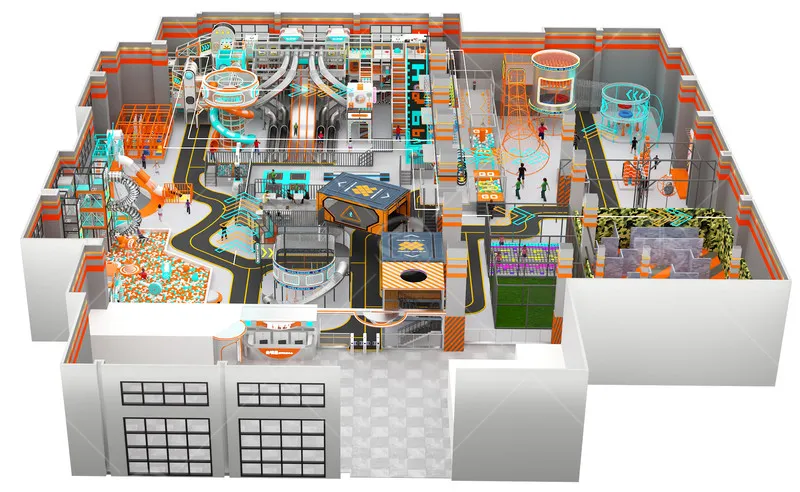
Introducing kids soft amusement facilities to shopping malls is not merely about adding entertainment; it is a strategy for business upgrading.
1. Increase Foot Traffic
Families are one of the key consumer groups for shopping centers.
In particular:
- Weekend family foot traffic
- Parent-child spending during holidays
- Children’s educational and entertainment needs
When a shopping center offers soft entertainment spaces that appeal to children, parents are more likely to visit and make repeat purchases.
2. Extending Dwell Time
One of the most critical business metrics for shopping centers is:
Customer dwell time
Indoor amusement facilities can effectively extend customer dwell time.
For example:
- The average customer stays for 1 hour
- With an indoor playground, this can increase to 2–4 hours
The longer the dwell time, the more opportunities for spending.
3. Boosting Retail Sales
Soft play facilities often drive sales in surrounding business categories:
- Food and beverage
- Children’s apparel
- Toy retail
- Education and training
Children’s play areas typically create a ripple effect on consumer spending.
Common Types of Indoor Play System in Shopping Malls
Different shopping malls are suited to different sizes and types of soft play systems.
The following are the most popular types on the market.
1. Children Soft Play Center
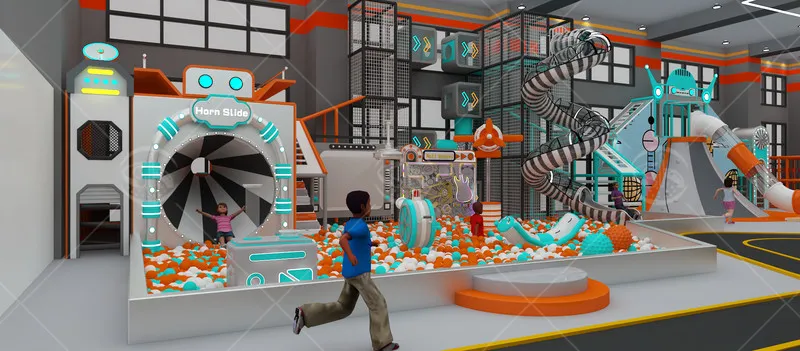
Toddler indoor play centers are among the most common soft playground facilities found in shopping malls.
Typical components include padded slides, ball pits, climbing nets, obstacle courses, and other padded structures. Their main advantages are their flexible space requirements and high safety standards, making them suitable for young children aged 2 to 8. The recommended area for such facilities is approximately 100 to 500 square meters.
2. Trampoline Parks
Trampoline park attractions have seen rapid growth in shopping centers in recent years. Common features include free-jump zones, slam dunk zones, foam pits, and obstacle courses. Their main advantages lie in their ability to attract children and teenagers aged 6 and older, as well as their high level of interactivity and high repeat visit rates. These attractions are particularly well-suited for medium- to large-sized shopping malls.
3. Rope Course Adventure Equipment
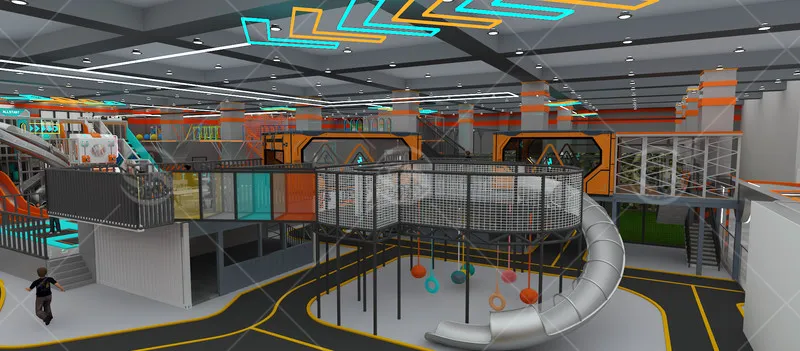
Adventure-based rope course amusement equipment are becoming increasingly popular. These primarily include rope mazes, high-altitude challenges, and suspension bridge obstacle courses. Their advantages lie in their highly immersive and social nature. However, they also come with a high average revenue per customer and are generally best suited for large commercial complexes.
4. Interactive Digital Amusement Equipment
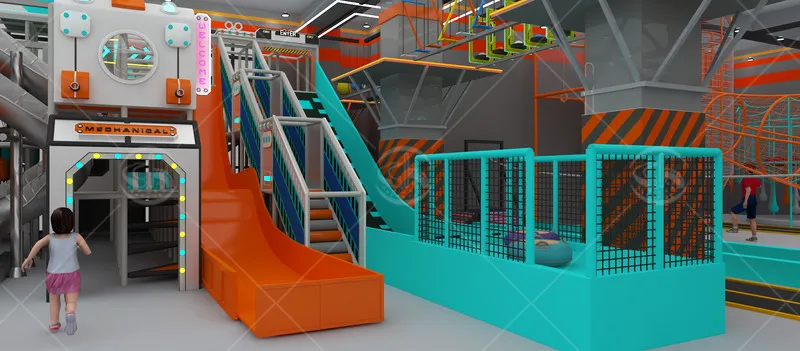
High-tech interactive digital entertainment equipment is becoming a major trend in the future of amusement. Common examples include AR interactive walls, interactive LED floors, projection games, and VR experience zones. Their main advantages lie in their high-tech appeal and ease of social sharing. They are particularly well-suited for new shopping centers.
5. Themed Immersive Amusement Parks
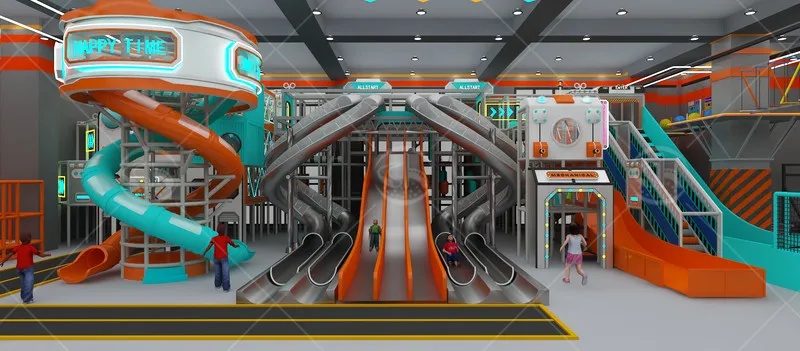
High-end shopping malls are increasingly turning to themed entertainment spaces. Themed kids play center designs can significantly enhance brand recognition. Popular themes include marine worlds, forest adventures, outer space, and castle kingdoms.
How to Choose the Right Indoor Playground Equipment for a Shopping Center?
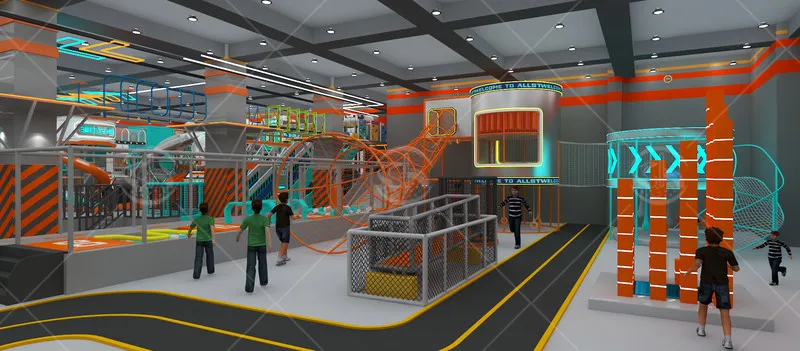
When selecting indoor play area equipment, popularity alone isn’t enough. The choice must align with the center’s business positioning.
Consider the Target Audience
- For families with children, we recommend soft play structures, role-playing soft areas, and interactive game zones.
- For teenagers, we recommend trampoline parks, VR simulators, and adventure challenge equipment.
- For high-end consumers, we recommend immersive theme amusement parks and tech-driven interactive facilities.
Consider the Floor Area
- For small spaces of 50–150 square meters, mini children’s crawling play areas and small soft play structures are suitable.
- For medium-sized spaces of 200–800 square meters, comprehensive children’s play centers and interactive play facilities are suitable.
- For large spaces of 1,000 square meters or more, comprehensive entertainment play centers and large-scale theme play parks are suitable.
Consider the Budget Plan
The investment budget for play equipment directly impacts the plan. Major costs include: playground equipment procurement, venue renovation, installation, labor for operations, and maintenance costs. It is recommended to develop an ROI model first.
The Investment Value of Indoor Playground in Shopping Malls
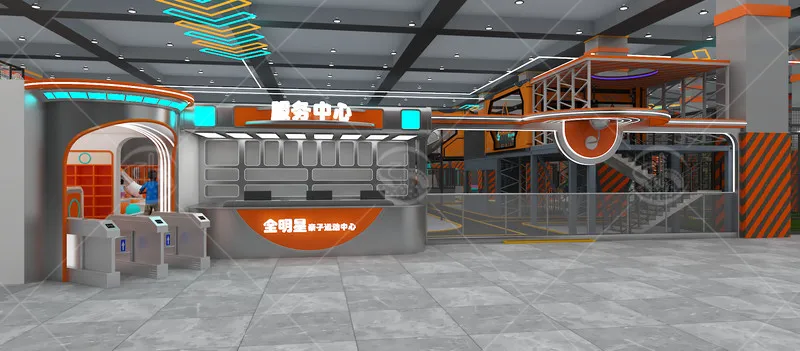
Many investors are most concerned about the payback period. The revenue models for children indoor adventure systems typically include:
- Admission revenue: single-visit tickets, multi-visit passes, monthly passes, and annual passes.
- Membership programs: prepaid cards, loyalty points, and member discounts.
- Event revenue: including birthday parties, holiday events, and parent-child classes.
- Commercial partnership revenue: brand collaborations, IP tie-ins, advertising sponsorships, and other sources of revenue.
Future Trends in Indoor Amusement Facilities at Shopping Malls
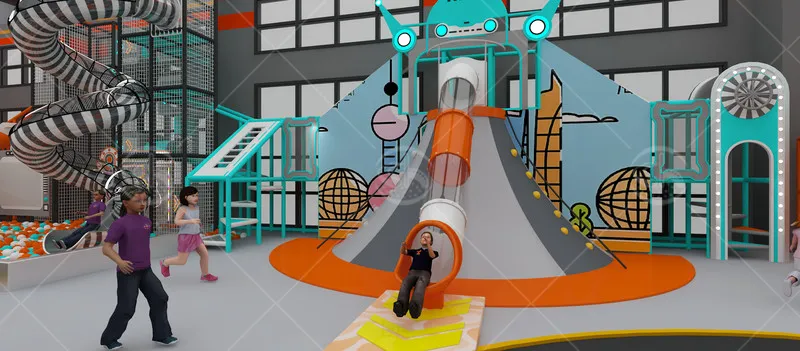
- Smart and Interactive: Future indoor play concept development will become increasingly smart, featuring AI-powered interactions, data tracking, and personalized experiences.
- Social Media-Friendly: export indoor playground systems that are perfect for taking photos and sharing on social media are more likely to go viral. Examples include giant slides, light-up installations, and themed spaces.
- Entertainment for All Ages: In the future, these recreation playground systems will no longer cater exclusively to children. More and more projects are beginning to cater to children, teenagers, adults, and families.
Summary
With the advent of the experience economy, competition among shopping centers has shifted from pure retail to “competition based on experiential value.” High-quality indoor entertainment soft play maze not only increase foot traffic and dwell time but also enhance the overall commercial value of a shopping center.
The keys to success are:
- Identify the target audience
- Selecting the appropriate type of kids entertainment center playground
- Conducting thorough investment analysis
- Choosing reliable global indoor play equipment suppliers
- Creating differentiated entertainment play experiences
For shopping centers seeking to enhance their commercial competitiveness, indoor entertainment center design and build are no longer optional. They are becoming a new source of foot traffic and a growth driver for profits.