




Specializes in customized indoor playground solutions that are safe, creative and efficient, helping you build engaging play spaces faster and more reliably.
The cost of an indoor playground in 2026 depends on several independent factors: play structure area, theme complexity, material tier, equipment mix, and logistics. Rather than quoting a single figure, this guide explains how each factor influences the final price, what buyers should confirm before signing, and how to compare quotes fairly. Buyers who want to review the full range of indoor playground equipment options can start there before narrowing down a configuration.
Note: All cost ranges in this article are indicative and depend on project-specific requirements, material costs, destination, and supplier terms. Buyers should obtain a formal quotation for accurate pricing.
What Drives Indoor Playground Cost
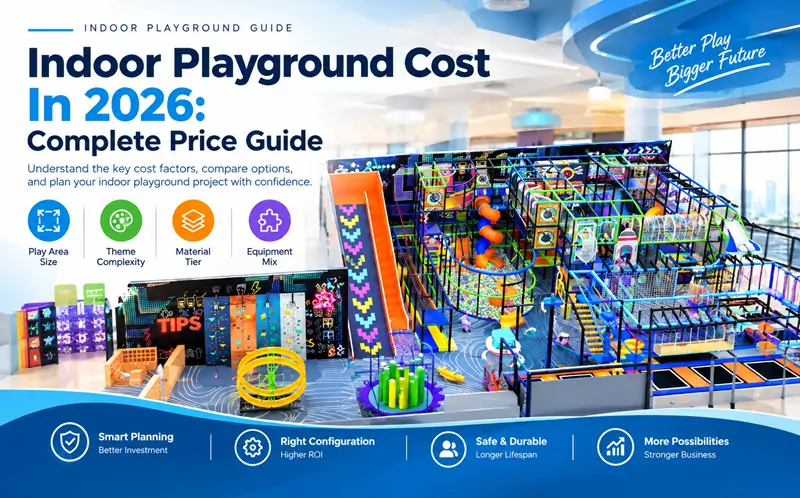
Indoor playground cost is not a single line item. It is the sum of several independent cost blocks, each with its own price drivers. Understanding these blocks helps buyers separate real cost differences from quote noise.
Play Area Size vs. Venue Footprint
The square meterage of the actual play structure — not the total venue footprint — sets the equipment cost baseline. A venue may allocate a significant portion of its floor area to reception, seating, restrooms, storage, and circulation space, leaving a smaller area for the play structure itself.
This distinction matters because a quote based on total venue size can look substantially higher than one based on play structure area, even when the equipment scope is identical. Buyers should ask suppliers to specify the play structure area separately from the total venue area.
Theme Complexity
Theming is a major cost driver. A standard soft play structure with simple color blocking costs less per square meter than a fully themed environment with custom fiberglass features, integrated LED lighting, and narrative-driven play zones.
Theme cost impact varies by how much custom fabrication is required. Themes that rely on color and form tend to be more cost-effective. Themes that require structural engineering, custom molds, or integrated electronics cost more per square meter.
Material Tier
Material tier is where cost differences become most visible — and where the wrong choice can create long-term maintenance liabilities. The three common tiers differ in steel thickness, foam density, PVC leather grade, and plywood specification.
| Material Component | Economy | Standard | Premium |
|---|---|---|---|
| Steel tube thickness | Thinner gauge | Mid-range gauge | Thicker gauge |
| Foam density | Lower density | Mid-range density | Higher density |
| PVC leather | Standard grade | Mid-range grade | Higher-grade, anti-fade |
| Plywood | Standard thickness | Mid-range thickness | Thicker, marine-grade |
| Warranty (structural) | Shorter | Standard | Extended |
| Expected lifespan (high traffic) | Shorter | Standard | Extended |
Specific numerical specifications should be confirmed directly with the supplier, as they vary by product line and configuration.
The price gap between economy and premium tiers can be significant. However, a longer-lasting structure often translates to a lower cost per year of service, especially in high-traffic venues where economy-tier equipment may need earlier replacement.
Equipment Mix
Adding trampolines, ninja courses, interactive games, or rope courses increases cost per square meter compared to pure soft play. A mixed-use family entertainment center will cost more per square meter than a dedicated toddler play area — but it may also generate higher revenue per visitor.
Indoor Playground Cost by Size
Size is the single largest cost driver, but it must be measured correctly. The table below outlines how cost typically scales by play structure area. Actual figures depend on material tier, theme, and configuration.
| Play Structure Size | Cost Behavior |
|---|---|
| 100–200 m² | Lower total investment; suitable for cafes, daycares, small retail |
| 200–300 m² | Moderate investment; suitable for community centers, small FECs |
| 300–500 m² | Mid-range investment; suitable for malls, medium FECs |
| 500–800 m² | Higher investment; suitable for destination FECs, large malls |
| 800 m²+ | Flagship investment; requires structural engineering and phased planning |
Cost ranges are not provided here because they depend heavily on material tier and theme. Buyers should request a project-specific quotation.
Buyers planning a smaller venue can review small indoor playground solutions for modular configurations that maximize vertical play within limited footprints.
Indoor Playground Cost by Theme
Theme cost impact varies by how much custom fabrication is required.
| Theme | Relative Cost Impact | Key Cost Drivers |
|---|---|---|
| Candy / Macaron | Lower | Pastel PVC colors, soft curve molding |
| Ocean | Moderate | Wave slide molds, marine soft sculptures |
| Space | Moderate to higher | Custom fiberglass forms, LED integration |
| Jungle | Higher | Tree structures, rope bridges, animal figures |
| Mini City / Role Play | Higher | Detailed facades, props, lighting |
Themes that rely on color and form rather than complex custom fabrication tend to be the most cost-effective. Themes that require structural engineering, custom molds, or integrated electronics cost more per square meter.
Hidden Costs to Budget For
Equipment cost is only the beginning. First-time operators consistently underestimate the costs between the factory gate and opening day. The following categories should be included in any project budget.
Shipping and Customs
Soft play equipment ships in standard containers. The number of containers depends on the volume and packing method of the structure. Sea freight rates vary by destination, season, and carrier. Import duty and VAT are additional and vary by country.
Buyers should confirm HS codes and duty rates with a customs broker before ordering. Shipping and import costs can add a significant percentage to the equipment price.
Installation
Installation has two common models:
- Factory-guided local crew: The manufacturer provides drawings, video support, and numbered parts. A local crew assembles on site. This is typically the more economical option but requires a capable local team.
- Factory-dispatched supervision: The manufacturer sends a supervisor to guide installation. This reduces rework risk and can speed up the process, at the cost of travel and daily fees.
Installation cost varies by project size, location, and model chosen. Buyers should ask for installation to be quoted separately from equipment.
Flooring and Safety Materials
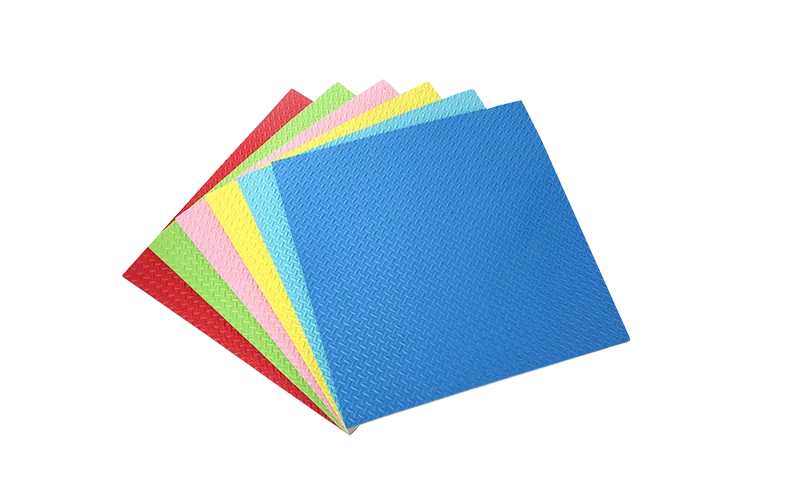
Flooring is required under and around the play structure, plus walkways and toddler zones. Options include poured-in-place rubber, bonded rubber tiles, and EVA foam tiles. Each option has different cost, lifespan, and maintenance characteristics.
Flooring cost depends on total area covered, material choice, and local labor rates. Buyers should confirm whether flooring is included in the equipment quote or quoted separately.
Maintenance and Replacement Parts
Even durable equipment requires replacement parts over time. Common replacement items include foam padding, safety nets, ball pit balls, and trampoline mats and springs. Replacement frequency depends on usage intensity and material quality.
A realistic annual maintenance budget should account for these items. Buyers should confirm the supplier's replacement parts policy before ordering.
How to Compare Indoor Playground Quotes
Comparing quotes is not about finding the lowest number. It is about understanding what each quote includes and excludes.
What a Quote Should Include
A complete quote should specify:
- Equipment list with model numbers and specifications
- Material tier for each component
- Play structure area in square meters
- Packaging method and container loading plan
- Estimated production lead time
- Warranty terms by component
- Whether installation support is included or quoted separately
Quotes that omit material specifications or warranty terms are difficult to compare fairly.
Questions to Ask Before Signing
- What is the play structure area in square meters, separate from total venue area?
- Which material tier is quoted, and what are the steel, foam, and leather specifications?
- Is pre-assembly testing performed before shipment?
- What documentation is provided for customs and safety compliance?
- What is the replacement parts policy after warranty expires?
Buyers who want to see how these questions play out in real projects can review completed playground projects across different markets and venue types.
Cost vs. Total Cost of Ownership
The lowest upfront price is rarely the lowest total cost of ownership. A premium-tier structure that lasts longer costs less per year than an economy-tier structure that requires earlier replacement.
When evaluating indoor playground cost, consider:
- Initial equipment cost
- Freight and import cost
- Installation cost
- Annual maintenance cost
- Replacement part cost over expected lifespan
- Downtime cost during repairs or replacement
A structure that costs more upfront but lasts significantly longer may deliver a lower cost per year of service — especially in high-traffic venues.
How to Prepare for an Accurate Quote
An accurate quote depends on the information provided. Buyers who prepare the following details typically receive faster and more precise quotes:
- Floor plan or dimensions (total venue size, ceiling height, column positions, exits)
- Target age group (toddler, early years, mixed ages, teen/adult)
- Capacity target (children accommodated simultaneously)
- Theme preference (or openness to recommendations)
- Budget range (helps designer recommend the right material tier)
- Destination country and city (for freight and duty estimation)
- Timeline (delivery and installation target)
A professional manufacturer can provide a free 3D design after receiving these details. The design includes layout, equipment list, material tier recommendations, and a preliminary cost estimate. Buyers can review the full-cycle project support process to understand what happens after the design stage.
FAQ
What is the average indoor playground cost per square meter in 2026?
Cost per square meter depends on material tier, theme, and configuration. Economy-tier soft play typically costs less per square meter than premium-tier themed structures. Buyers should request a project-specific quotation rather than relying on generic per-square-meter figures.
How much does a 300 m² indoor playground cost?
A 300 m² play structure cost depends on material tier, theme, and equipment mix. The equipment price alone is only part of the total project cost — freight, installation, and flooring are additional. Contact a supplier with your floor plan for an accurate estimate.
Does indoor playground cost include installation?
Most factory quotes are EXW or FOB and do not include installation. Installation is typically quoted separately, either as a factory-guided local crew model or a factory-dispatched supervision model. Buyers should confirm which model is included.
What is the biggest hidden cost in an indoor playground project?
Freight, import duties, and flooring are the three most commonly underestimated costs. Together they can add a significant percentage to the equipment price before installation begins.
How can I reduce indoor playground cost without sacrificing safety?
Buy factory-direct rather than through a trading company, use standard-tier materials in high-wear areas and premium materials in visible zones, and choose a theme that relies on color and form rather than complex custom fabrication.
How long does it take to receive a quote and design?
A professional manufacturer typically provides a free 3D design and preliminary quote within a few business days of receiving floor plan and requirements. Unlimited revisions are often standard before final quotation.
Conclusion
Indoor playground cost in 2026 is shaped by size, theme, material tier, equipment mix, and logistics. The most important decision is not how to spend the least upfront, but how to achieve the lowest total cost of ownership over the equipment's lifespan.
Buyers should prepare a clear floor plan, a realistic budget range, and a target age group. Request a free 3D design and a landed cost estimate — not just an equipment quote. And choose a factory-direct partner who provides certification documentation, pre-assembly testing, and permanent parts support.
For buyers ready to move from cost analysis to configuration, contact our design team to discuss project requirements and receive a free 3D layout.